
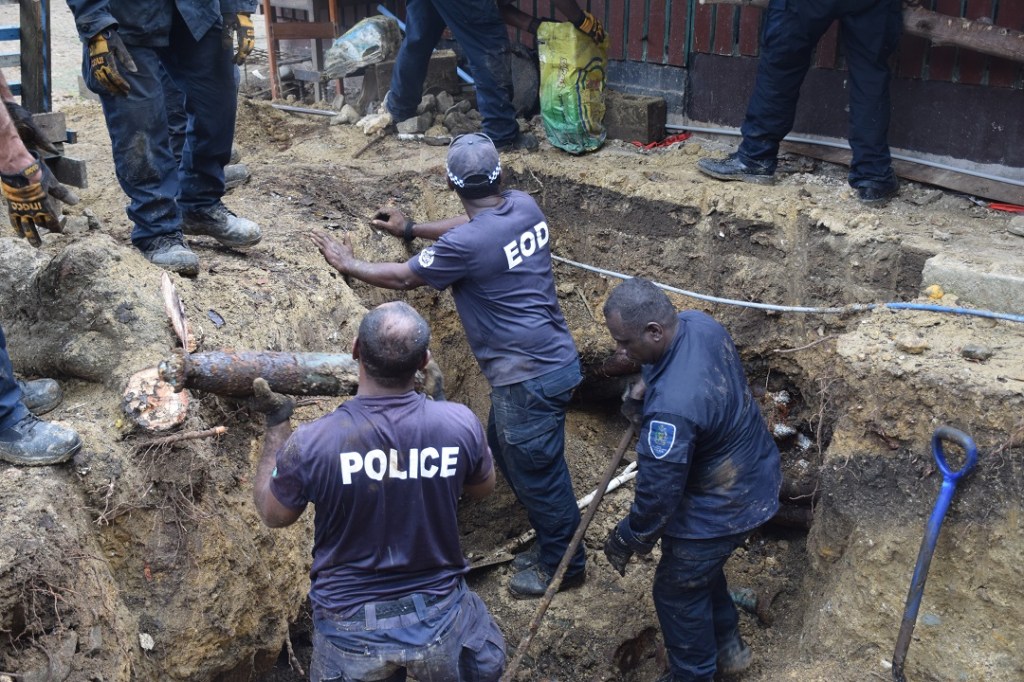
HONIARA, Solomon Islands – Authorities have safely removed 202 unexploded ordnance from St. Nicholas Anglican College in Honiara, following a discovery that has renewed attention to the lingering dangers of World War II in the region.
The Solomon Islands government confirmed that the ordnance, identified as U.S. projectiles, was uncovered on Aug. 20 when school staff dug a sewage trench near a staff house. The discovery prompted an urgent response from the Explosive Ordnance Disposal Department of the Royal Solomon Islands Police Force. The ordnance was transported to Hell’s Point, a secure location, with assistance from the Australian Defense Force, where it awaits safe destruction.
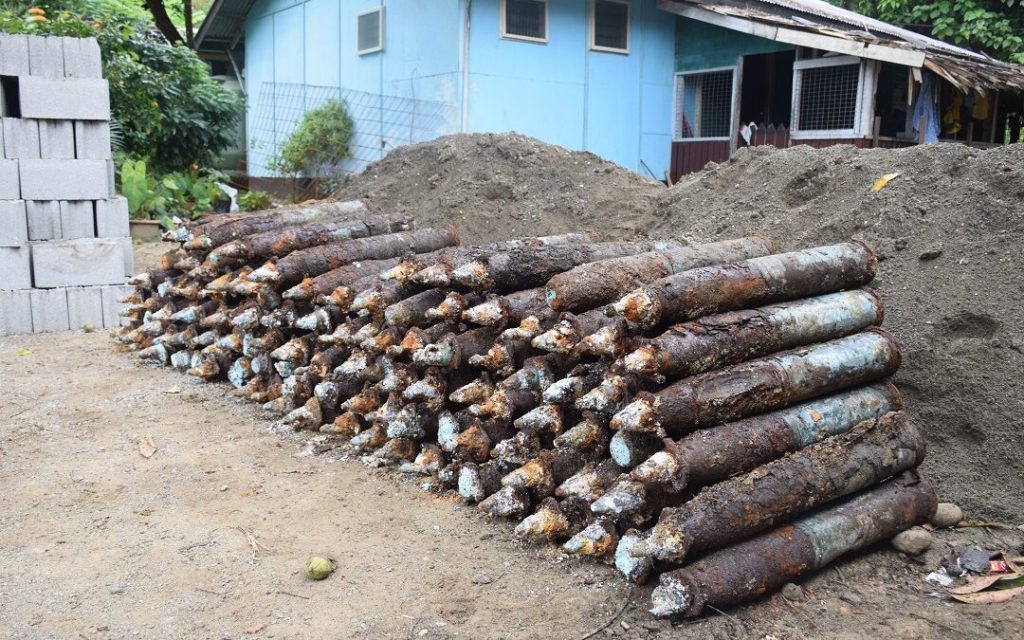
Unexploded ordnance from World War II can be extremely dangerous, even deadly. These remnants of war pose various risks, including the potential for explosion. Even after decades, ordnance can remain volatile, with corrosion and damage from impact making it difficult to safely defuse and unpredictable in behavior.
There are additional dangers beyond the immediate risk of explosion. Some ordnance from World War II may contain chemical weapons that, if disturbed, could contaminate the environment. Exposure to these chemicals has been reported, particularly in cases involving chemical warfare agents. Furthermore, large ordnance can produce damaging noise levels, which can have far-reaching effects, including potentially harming marine mammals up to 25 kilometers away.
Experts advise that if anyone encounters unexploded ordnance, they should stop and avoid moving closer, isolate the area to keep others away, retreat without touching the object, and immediately report it to authorities.
Given that unexploded ordnance can be difficult to spot, especially when rusted or hidden by vegetation, it is crucial to approach any suspicious objects with extreme caution.
While the immediate threat at St. Nicholas Anglican College has been addressed, the incident serves as a stark reminder of the dangers still posed by World War II ordnance. The Solomon Islands were a critical battleground during the Solomon Islands Campaign, a six-month struggle that included fierce fighting on land, at sea, and in the air.
According to The National WWII Museum in New Orleans, the campaign began on Aug. 7, 1942, when American forces first landed on the Solomon Islands, including Guadalcanal, Tulagi, and Florida. The Marines quickly secured Tulagi and Florida by Aug. 9 and moved inland on Guadalcanal, where they encountered little initial resistance. However, the fight for control of Guadalcanal, particularly the strategically important Henderson Field, became a protracted and bloody struggle, with both sides suffering heavy losses.
The U.S. faced significant logistical challenges, including difficult jungle terrain, inhospitable weather, and a determined enemy that fought to the death. The Battle of Savo Island was the first of many deadly naval engagements in the region. Despite early mistakes and the relentless nature of the conflict, U.S. forces gradually gained the upper hand, and by February 1943, the Japanese withdrew, surrendering the island to the Allies.
The Solomon Islands Campaign was costly for both sides. The Allies lost approximately 7,100 men, 29 ships, and 615 aircraft, while the Japanese lost 31,000 men, 38 ships, and 683 aircraft. The campaign was a critical step in the U.S. strategy of island-hopping, which ultimately led to the capture of key islands closer to Japan.
The Solomon Islands government has emphasized the importance of vigilance and awareness of unexploded ordnance, urging residents to report any suspicious objects to authorities. The presence of these deadly remnants of war continues to pose a threat to local communities more than 80 years after the conflict.
St. Nicholas Anglican College has confirmed that the school will remain closed until Aug. 22 as a precautionary measure following the removal of the ordnance.
—



 The New Atoll
Leave a comment