
Veteran Pacific island journalist comments on why the assumption of ignorance related to The Organized Crime and Corruption Reporting Project is as harmful as it’s critics
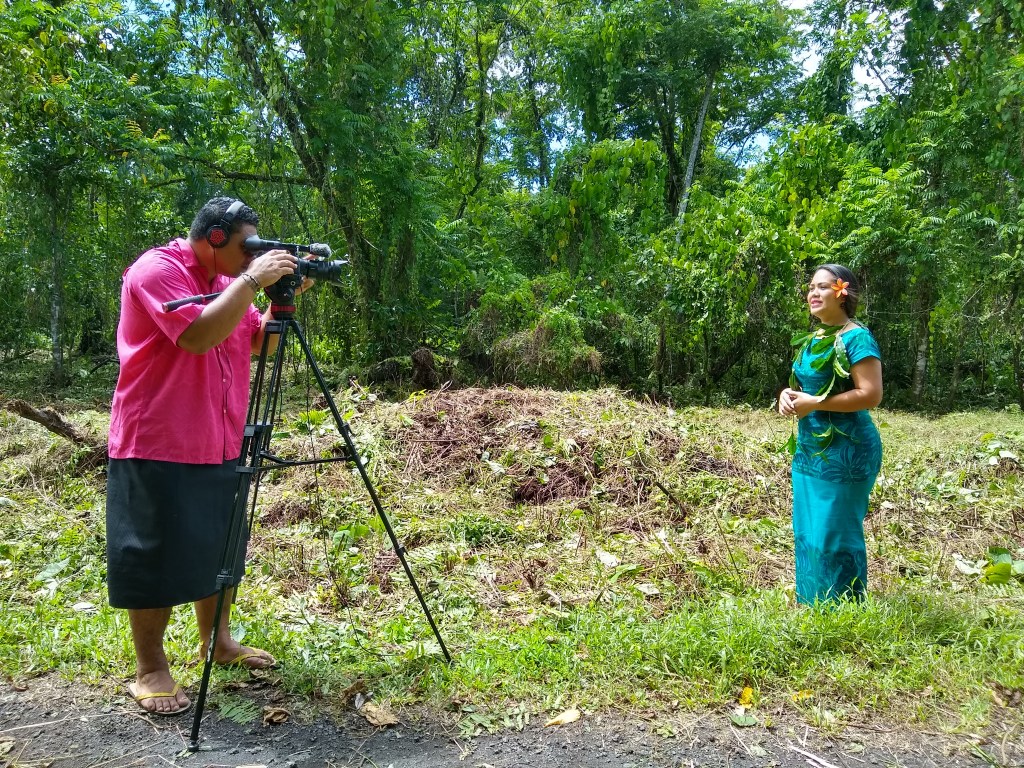
By Lagipoiva Cherelle Jackson
There are very few ways that Pacific Island news media can upskill on the job, build news startups, or sustain our newsrooms. With fairly limited markets, developing-country wages, and severely under-resourced newsrooms, Pacific Island newsrooms have struggled to uphold the Fourth Estate through sheer passion, might, and perseverance.
As a Samoan journalist and editor, I have spent most of my career, working in these very newsrooms and rubbing shoulders with my colleagues from across other island nations. Together, we covered issues threatening the existence of our islands and those that uphold the beautiful and diverse cultures of the Pacific. In our newsrooms, we sometimes shared one camera, hitched rides with each other, piled all the journalists from one event into a pickup truck, and sometimes shared one plate of food among three or four of us. We only had three printing presses on island, if one newspapers press was down, they would get it printed at the competitions printing press. We hustled to ensure that we not only survived but reported on the stories that mattered in our small communities.
These struggles meant we simply did not have the luxury of specialization or specific beat reporters. Nevertheless, raised by a fierce High Chief, I devoted my spare time to reporting on environmental issues. In 2001, I wrote my first front page in the Samoa Observer about a development that would harm the largest lowland forest on my home island of Savai’i. In 2007, I wrote the first front page dedicated to the findings of an Intergovernmental Panel on Climate Change Assessment Report for Newsline Samoa Newspaper. Both times, I had to make a strong case to the editors about the relevance of these stories, which at the time were not considered “sexy” topics for the front page.
For many years, as lonely as it was, I kept at it. Eventually, I covered the Conference of the Parties alongside journalism colleagues from Fiji and Papua New Guinea, courtesy of regional intergovernmental organizations that invested in journalism for a more informed Pacific region.
Training journalists became my secondary job on covering climate issues on our islands. Eventually, I conducted the first study on the coverage of climate by Pacific Island media at the University of Oxford through a Reuters Institute Fellowship. Through this, analyzed content from the Solomon Islands, Marshall Islands, Fiji, Tonga, and Samoa. What I found was that newsrooms lacked the resources to fully integrate climate into their coverage or to devote journalists specifically to the topic.
After my studies, I returned to Samoa and began working with local, regional, and international organizations and universities to build the skills of Pacific Island journalists to report on the impacts of the climate crisis on our islands.
The premise here is simple: we are on the frontlines of the climate crisis, and we should be the ones telling the stories of how it truly impacts our people, cultures, and islands.
In seeking support for these trainings and newsroom resources, it became clear early on that local news media in our far-flung islands had little to no chance of securing funding from private sectors, foundations, or initiatives in the global north, including the UK, US, and EU. We either did not qualify, lacked the capacity, or lacked the resources or infrastructure to support the kinds of funding we could potentially receive from philanthropic sources.
As a result, our newsrooms, young journalists, and media schools and institutes heavily depended on support from United Nations agencies, bilateral partners to our governments, such as the New Zealand High Commission, Australian High Commission, and US Embassy, and occasionally nonprofits or intergovernmental organizations for training or reporting grants.
These were the primary sources of funding to support media, as most of our island governments had other pressing priorities, including livelihoods, education, and health.
In the past five years, there has been a welcome shift in funding sources for Pacific journalism projects. Notable examples include the Judith Neilson Institute’s Pacific Project with The Guardian and Pacific Geo Journalism, a USAID-funded project on climate journalism through The Earth Journalism Network.
OCCRP’s entry into the Pacific news media landscape was another welcome investment in this struggling industry. OCCRP supports investigative journalism in regions where transparency and accountability are critical. As part of this effort, OCCRP, in partnership with the East-West Center, launched the Pacific Islands Financial Investigative Reporting and Mentorship Initiative (FIRM), benefiting journalists from Fiji, Papua New Guinea, Solomon Islands, and Tonga.
In Papua New Guinea, OCCRP supports InsidePNG—a media outlet founded in 2022 amidst a fight for press freedom. The outlet uses the program to amplify marginalized voices and champion accountability. In the Solomon Islands, reporters from In-depth Solomons, a nonprofit investigative platform, continue their work to expose corruption and address pressing local issues. The funding provides much-needed salary support for up to three years and specialized training in investigative reporting, journalism safety, cybersecurity, and visual storytelling.
Over my 25 year career as a Pacific island journalist, I have had the pleasure of either working with, meeting or supporting every journalist and newsroom involved in these projects. I know them personally, I know their work, and some of their editors, their publishers, and know of the struggles they face. They are hardworking journalists and ambitious newsrooms that struggle daily to survive, often facing funding and political constraints imposed due to their work.
The notion that these journalists are somehow influenced by the US State Department because of their affiliation with OCCRP is a classic example of a colonial hangover of intellectual inferiority and residual colonial views of ignorance. These stereotypes continue to plague Pacific people, brown and Black people, even in the pursuit of truth. For far too long, lingering assumptions of naivety have hindered our access to advanced training in climate, environment, or science reporting, as development partners arrive assuming we lack knowledge or can be easily influenced. These assumptions persist, even in journalism, continuing to undermine our credibility and agency.
By addressing systemic challenges like low pay, political pressure, and fear of reprisals, the funding provided to these Pacific Island newsrooms through OCCRP empowers Pacific journalists to uphold press freedom, hold power to account, and ensure their communities benefit from robust, independent journalism. It also allows journalists to specialize in climate journalism and delve into the critical stories they were previously unable to cover due to resource constraints.
The funding sources for OCCRP were transparent from the outset. The assumption that this undermines the professionalism and credibility of Pacific Island journalists and news media is yet another misguided attempt to infantilize an entire region of dedicated journalists.
*Views expressed by the Author are her own and do not represent any organizations she affiliates with.


 The New Atoll
Leave a comment