
An OpEd by The New Atoll
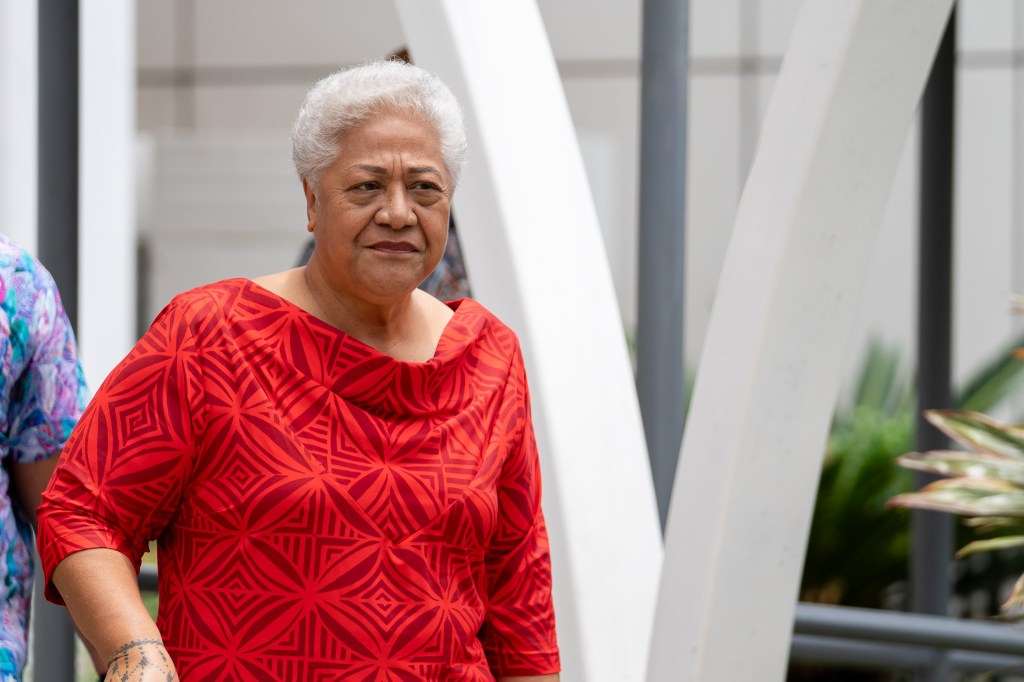
In Samoa’s political landscape, marked by tradition and pursuits of power, Prime Minister Fiame Naomi Mata’afa has a long history of leadership, and resilience. As the first female prime minister of Samoa, she has carried the weight of expectations and the scrutiny of her critics. Yet, as her tenure approaches its final year, Fiame finds herself confronting an unexpected betrayal – a challenge not from political adversaries but from within her own ranks.
The current crisis stems from what should have been a straightforward matter. When Laauli Leuatea Polataivao refused to temporarily step down following the announcement of charges against him, he set into motion a chain of events that has marred not only his reputation but the stability of the government. What this moment called for was humility – a recognition of the greater good over personal pride. Yet, instead of prioritizing service to Samoa, Laauli’s defiance has exposed a troubling truth: loyalty to party politics and individual egos has superseded the responsibility to serve the nation.
Parliamentarians who have aligned themselves with Laauli are betraying the very oath they swore to uphold. They were elected to serve Samoa – not their party or their own ambitions. Their decision to side against the leader they themselves put in office is a direct affront to the principles of good governance. In doing so, they dishonor the very essence of their role: to act in the best interests of the Samoan people.
For Fiame, this moment is no doubt painfully familiar. We have seen this before. The challenge of navigating leadership as a woman in the Pacific is riddled with cultural, political, and gendered obstacles. To be a woman in power here often means enduring the egos of men steeped in traditions compounded by Christian practices that only ever placed women subservient to men. It means contending with the indignity of being cast out, not for lack of capability, but because she is perceived as lesser than, and as not amounting to the same standards as a man. This has resulted in her position being undermined and her by the very colleagues who once stood beside her.
The disrespect shown by removing Fiame from their party, despite her leadership and cultural status, is deeply telling. It is a move that speaks to a lack of decorum, a disregard for the values that underpin Samoan society, and an all-too-common narrative of undermining women in leadership. But for Fiame, this is just another day. The stoicism she exhibits is not a façade; it is a reflection of the strength and resolve that come with being a Samoan woman with a Chiefly title, steeped in the traditions of service and duty.
While those who challenged her leadership may see themselves as protectors of their party’s vision, history will remember them as those who betrayed their promise to a nation.
In the end, this episode is not just a reflection of political dysfunction but a sobering reminder of the challenges Pacific women face in leadership. It underscores the need for a broader reckoning with the values that drive governance in Samoa and beyond. It calls for leaders who understand that power is not a tool for self-preservation but a responsibility to the people they serve.
Through the twists and turns of the past week, she has remained unshaken. She rises above the fray, as Samoan chieftesses have done for generations, embodying the resilience, dignity, and unwavering strength that define true leadership. This is yet another reminder that while the path for women in power is fraught with obstacles, it is one they tread with intention and resolve – if not for her, then for every Polynesian woman who follows in her footsteps.






 The New Atoll
Leave a comment