
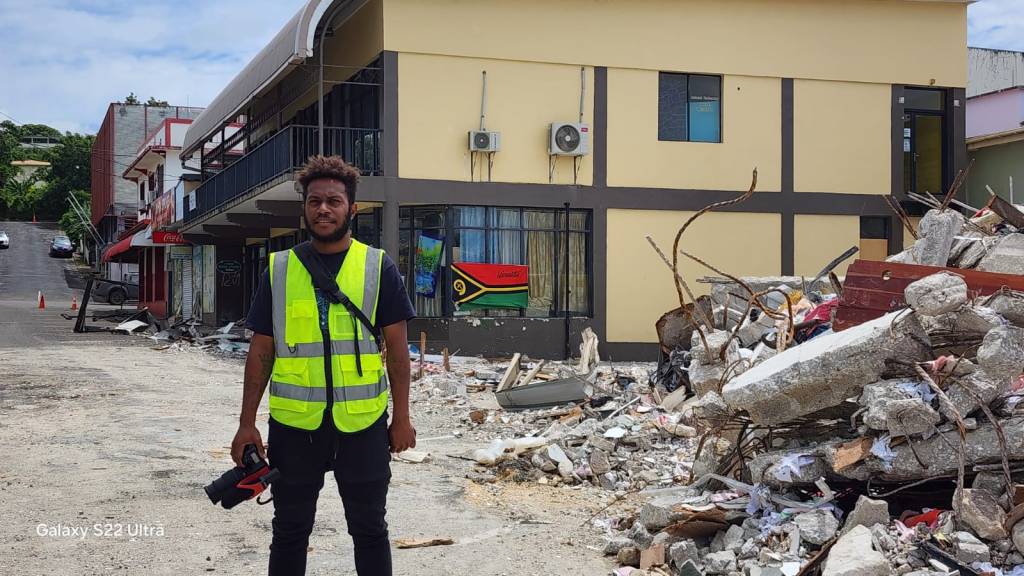
PORT VILA, Vanuatu : For Doddy Morris, a journalist with the Vanuatu Daily Post, the 7.3 magnitude earthquake that struck Vanuatu on December 17, 2024, was more than just a story—it was a personal tragedy. Amid the chaos, Morris learned his brother, an Anglican Priest had died.
“My mom called me crying and asked, ‘Did your brother die?’ I wasn’t sure and told her I was heading to Vila Central Hospital right away,” he recalled. Morris arrived at the hospital to confirm the worst. “My heart sank when I confirmed that my brother had indeed passed away. At that moment, I forgot about my job.”

Despite his grief, Morris joined his remaining brothers at the hospital mortuary that night, staying by their deceased sibling’s side and mourning together. “We were the only ones there. We spent the whole night drinking kava outside while he lay in the cool room,” he said.
The quake, which claimed 14 lives, injured over 265 people, and displaced more than 1,000, left an indelible mark on Port Vila and its residents. Infrastructure damage was extensive, with schools, homes, and water reserves destroyed, and the Central Business District (CBD) heavily impacted.
In the days following the earthquake, Morris returned to his role as a reporter, capturing the unfolding crisis despite the emotional toll. “When the earthquake struck, I thought I was going to die myself,” he said. Yet, minutes after the tremor subsided, he grabbed his camera and rushed to the CBD.
At the heart of the destruction, he witnessed harrowing scenes. “I was shocked to see the collapsed Billabong building. A body lay covered with a blue tarpaulin, and Pro Rescue teams were trying to save others who were trapped inside,” Morris recounted. The lack of a network connection frustrated his efforts to report live, but he pressed on, documenting the damage.
A month after the disaster, Morris continues to cover the aftermath as Vanuatu transitions from emergency response to recovery. “A month has passed since the earthquake, but the memories remain fresh. We don’t know when Port Vila will return to normal,” he said.
His photojournalism has been demonstrated the true impact of the earthquake as he continues to capture the mourning of a nation after such a tragic event.

The earthquake left deep scars, not only on the nation’s infrastructure but also on its people. “Unlike cyclones, which we can predict, prepare for, and survive, earthquakes strike without warning and show no mercy,” Morris said.
Through grief and uncertainty, Morris remains committed to his work, documenting the resilience of his community and the challenges they face as they rebuild. His reporting serves as a testament to the strength of both the people of Vanuatu and a journalist who continues to bear witness, even in the face of personal loss.

Reporting on his own community while grappling with personal loss is a reality for many Pacific Island journalists who cover disasters. For Doddy Morris, reporting on the traumatic events of the earthquake meant confronting his own grief while documenting the grief of others.
Lagipoiva Cherelle Jackson, a Pacific journalism trainer with the Dart Center for Journalism and Trauma, expressed her support for Morris and his colleagues. “Morris has shown extraordinary courage and resilience in continuing to report on this devastating earthquake while navigating his own personal loss. His work exemplifies the strength and dedication of Vanuatu’s journalists in the face of unimaginable challenges.”
—————————————————————————
Journalists covering traumatic events while experiencing their own loss can draw on strategies to help manage the emotional toll of their work. According to the Dart Center for Journalism and Trauma, these include:
- Prioritizing self-care: Ensuring adequate rest, nutrition, and exercise to maintain resilience.
- Seeking peer support: Talking with trusted colleagues or mentors who understand the unique challenges of trauma reporting.
- Setting boundaries: Knowing when to take breaks from emotionally taxing stories to avoid burnout.
- Accessing professional help: Consulting trauma-informed counselors or mental health professionals when needed.
Resources like the Dart Center’s Journalist Trauma Handbook provide further guidance for reporters in the field. For more information, journalists can access the full handbook here.

 The New Atoll
Leave a comment