
iKiribati Minister provides insights to the recent media storm surrounding that missed meeting
Opinion by Ruth Cross Kwansing, Minister of Women, Youth, Sport & Social Affairs, Government of Kiribati
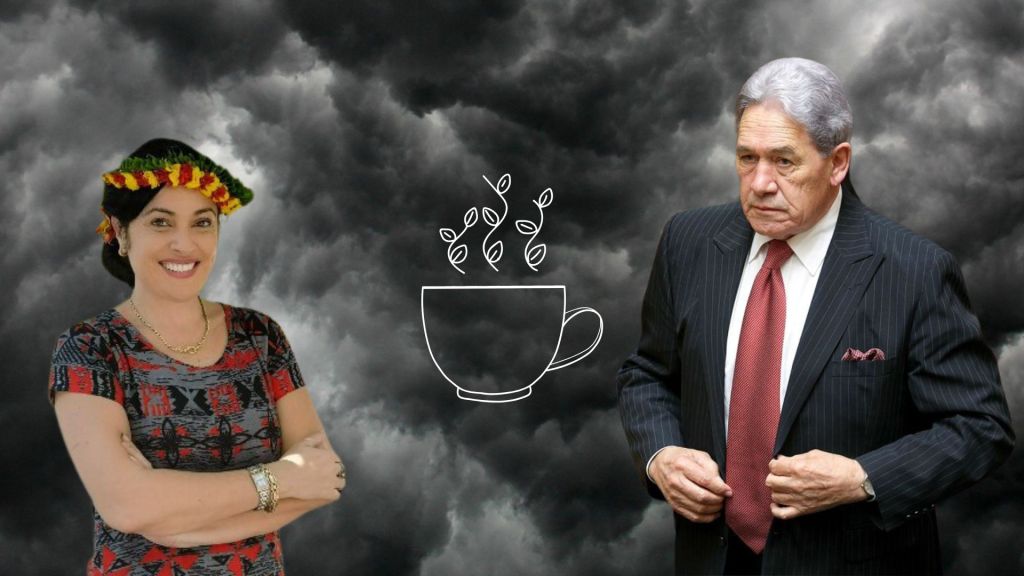
TARAWA, Kiribati: We were polarized by America in the past week, but in the same way that a windscreen wiper distracts you from the rain, our Pacific news cycle and local coconut wireless became dominated by a whirlwind of speculation after New Zealand’s Deputy Prime Minister and Minister of Foreign Affairs, Peter Winston, announced a review of New Zealand’s aid to Kiribati. This followed what was perceived as a snub by our President, His Excellency Taneti Maamau. The New Zealand media, in its typical fashion, seized the opportunity to patronize Kiribati, and the familiar whispers about Chinese influence began to circulate.
Amidst this media-manufactured drama, I found myself reflecting on that recent experience, which offered a stark contrast to the geopolitical noise. We had the privilege of attending the ordination of a Catholic priest in Onotoa, where the true spirit of Kiribati was exemplified in the splendor of simplicity. Despite limited resources, the island community, representing various faiths, came together to celebrate this sacred event with unparalleled joy, humor, and hospitality from silent hands that blessed us with love. Hands that built thatched huts for us to sleep in, wove mats, cooked food, made pillows, and hung bananas in maneabas to provide for guests from all over Kiribati and Nauru. Our President, himself a Protestant, had prioritized and actively participated, embodying by example the unity and peace that Bishop Simon Mani so eloquently spoke of. We laughed, we cried, and we felt the spirit of our loving God.
That spirit of harmony and hope we carried from recent experiences felt shaken overnight by news of New Zealand’s potential aid withdrawal. Social media in Kiribati erupted with questions and concerns, fueled by an article claiming that New Zealand was halting aid due to President Maamau “snubbing” Deputy Prime Minister Winston.
Importantly, President Maamau would never in a millennium intentionally snub New Zealand or any foreign minister. The reality is far more nuanced. At the end of 2024, President Maamau announced to his Cabinet Ministers that he would delegate international bilateral engagements to Vice President Dr. Teuea Toatu or other Ministers and Ambassadors as appropriate. This allowed him to focus intently on domestic matters, including the work plan for our national necessities outlined in the KV20 vision and the 149 deliverables of his party manifesto.
While the Vice President was prepared to receive the New Zealand delegation, it seems Minister Winston was insistent on meeting with the President himself, leading to the cancellation of his trip. This insistence on bypassing established protocol is not only unusual but also, let’s just say it with as much love as possible, disrespectful to Kiribati’s sovereignty. It is also worth noting that the Deputy Prime Minister of Australia recently visited Kiribati and engaged with the Vice President and Cabinet Ministers without any such reluctance.
New Zealand’s subsequent announcement of an aid review, including a potential threat to the $2 million-funded RSE scheme, has understandably caused serious anxiety in Kiribati. The potential loss of funding for critical sectors like health, education, fisheries, economic development, and climate resilience would, of course, have a devastating impact on our people. After committing $102 million between 2021 – 2024, these are major threats to public health, where $20 million was invested in initiatives like rebuilding the Betio Hospital, training doctors, building clinics, NCD strategic planning, and more. $10 million in education, $4 million in developing the fisheries sector – it’s an expansive and highly impactful list of critical support for capacity strengthening in our country.
While New Zealand has every right to review its aid program to Kiribati or any developing country, it is crucial that these kinds of decisions are based on genuine development processes and not used as a tool for political pressure. Linking Pacific aid to access to political leaders sets a questionable precedent and undermines the principles of partnership, mutual respect, and mana that underpin the inextricably linked relationships between Pacific nations.
The reference to potential impacts on I-Kiribati workers in New Zealand under the RSE scheme is particularly concerning. These hardworking individuals contribute significantly to the New Zealand economy in a mutually beneficial arrangement. We deserve to be treated with fairness and respect, not weaponized to cut at the heart of what drives our political motivations: providing for our people, who are providing for our children.
Despite this unfortunate situation, I believe that dialogue and understanding, along with truth and love—will prevail. In the spirit of the “effectiveness, inclusiveness, resilience, and sustainability” that upholds New Zealand’s own development principles, we should all revisit this issue with greater humility and a commitment to resolving such misunderstandings.
As a New Zealand-born, Australian-Tuvaluan, I-Kiribati politician representing the largest constituency in Kiribati, I have zero pride or ego and will never be too proud to beg for the needs of the people I serve, who placed their faith in a government that would put them first.
We would love to host Deputy Prime Minister Peter Winston and a New Zealand government delegation in Kiribati, and we are indescribably grateful for the support provided since we gained independence in 1979. Our history stretches back even further than that, when New Zealand’s agricultural industry was nourished by phosphate from Banaba, and we continue to treasure the intertwined links between our nations.
Let us prioritize cooperation and mutual respect over ego and political posturing. Let’s drink fresh coconuts and eat raw fish together and talk about how we can change the world by changing ourselves first. The tea party of Pacific partnership must continue to strengthen and deepen, especially when challenged to overcome misunderstandings. It should always be one where Pacific voices are heard and respected lovingly while we work towards a collective vision of health, peace, and prosperity for all.
But if development diplomacy ever fails, we’ll remember that I-Kiribati people are some of the most determined and resilient on this planet. Our ancestors navigated to these isolated isles of the Pacific, surrounded by 3.5 million kilometers of ocean, and found Tungaru, which means a place of joy. We arrived in this world with nothing, and we’ll leave it with nothing, and we get to live our whole lives not feeling sorry for ourselves in this island paradise of ours, this place of joy, where we are wealthy in ways that money cannot buy.
We will survive.

 The New Atoll
Leave a comment