
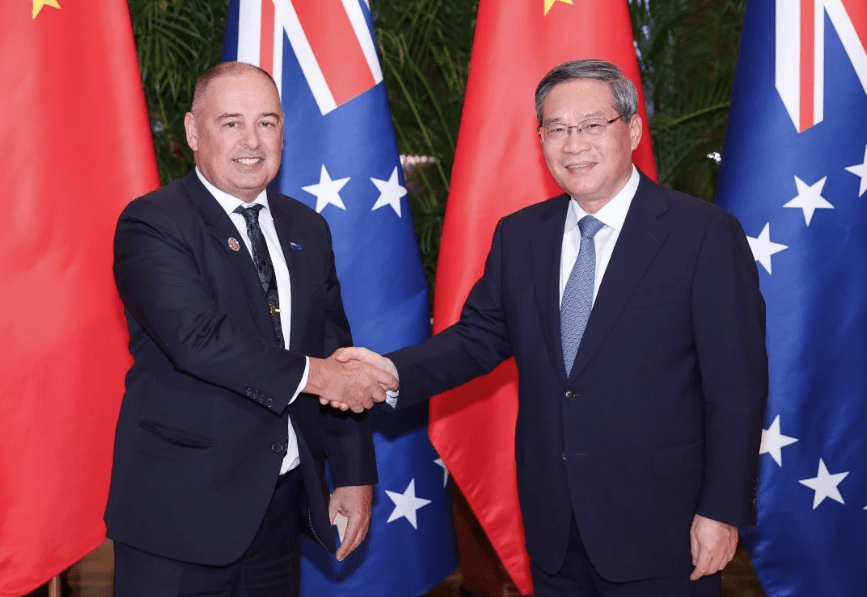
RAROTONGA, Cook Islands (Feb. 21, 2025) : The Cook Islands’ newly signed partnership with China is facing political scrutiny and public protests as concerns grow over transparency, sovereignty, and the nation’s regional alliances.
Prime Minister Mark Brown signed the Joint Action Plan for Comprehensive Strategic Partnership (CSP) 2025-2030 with Chinese Premier Li Qiang during an official state visit to China from Feb. 10 to 14. The agreement outlines cooperation in various sectors, including trade, investment, tourism, ocean science, aquaculture, agriculture, infrastructure, climate resilience, disaster preparedness, technology, education, and cultural exchange. The deal includes a $4 million grant from China but does not contain security-related commitments.
Opposition Raises Transparency Concerns
Opposition leader Tina Browne has voiced strong concerns over the lack of consultation with the public and parliament before the agreement was signed. She emphasized that the people of the Cook Islands have a right to know the full details of such a significant partnership, warning that the deal could impact the nation’s sovereignty, economic independence, and relationships with existing partners, particularly New Zealand.
“This government has a duty to be transparent with our people,” Browne said. “We need to fully understand the terms and conditions of this agreement and what it means for our future.”
Government Defends the Agreement
In response to the criticism, Prime Minister Brown defended the partnership, stating that it aligns with the country’s strategic interests and complements its long-standing relationship with New Zealand. He assured that the full details of the Joint Action Plan would be made public in the coming days.
“This partnership is about enhancing our development opportunities, strengthening our economy, and increasing regional cooperation,” Brown said. “We have always valued our relationship with New Zealand, and this agreement does not change that.”
New Zealand’s Response
The Cook Islands’ decision to strengthen ties with China has also drawn attention from New Zealand, which maintains a special constitutional relationship with the Pacific nation. New Zealand Foreign Minister Winston Peters expressed concern over the lack of consultation and said the government would carefully assess the implications of the deal.
“We are reviewing the details of this agreement and its potential impact on our longstanding partnership with the Cook Islands,” Peters said. “It is crucial that transparency and regional cooperation remain at the forefront.”
Public Protests and Political Debate
The agreement has sparked public backlash, with hundreds of Cook Islanders marching to parliament in Avarua to demand greater transparency. Protesters voiced concerns that closer ties with China could undermine the Cook Islands’ sovereignty and its close relationship with New Zealand. Many are calling for further scrutiny before any commitments are finalized.
As the Cook Islands government prepares to release the full details of the agreement, the nation finds itself at a crossroads, navigating between economic opportunity, political accountability, and the complexities of regional geopolitics.



 The New Atoll
Leave a comment