

Women in Tuvalu say the climate crisis is threatening the pandanus leaves they depend on to weave mats, fans and ceremonial garments. The decline of this key plant poses a direct threat to women’s cultural roles and their main source of income, as handicrafts have long sustained those outside the formal workforce. Organizations such as Tuvalu Women for Change are now working to preserve these traditions and support women in passing their skills to the next generation.

By Lagipoiva Cherelle Jackson
Funafuti, Tuvalu: On the narrow atoll of Funafuti, in Tuvalu, a weaver sits at a table sorting through dried pandanus leaves. She strips them carefully, separating the ones that can still be used, and begins laying them out. She has already made progress on a woven bag. For generations, pandanus has been central to women’s cultural practice in Tuvalu. But as the climate crisis intensifies, the plants needed for weaving are becoming harder to find and harder to work with.
“The leaves are not like before,” says Lino Tane, a weaver who has worked with pandanus for decades. “They are fewer now, and they are drier. Some of them turn brown before we can even use them.”
Pandanus (Pandanus tectorius) is a hardy plant that thrives across the Pacific. In Tuvalu, its long spiky leaves are softened, stripped, and woven into fans, mats, skirts, and ceremonial adornments. These items are more than decorative. They hold genealogical and cultural meaning, functioning as cultural gifts during funerals, marriages, and rituals. These woven items, particularly the ceremonial skirts known as te titi tao, hold deep cultural significance. They are used in important social and ritual contexts, such as dances (fatele), weddings, and community events, where they serve as a powerful expression of cultural identity and heritage. The specific patterns and designs woven into a titi can indicate the maker’s island or family, and these traditional skills are passed down through generations.
But for Tane, the material has become unreliable. Leaves that once boiled into fine, pliable strips now crack and dry too quickly. She explains that while three leaves were once enough for a fan, now she often needs five or six. “We used to find the good ones easily,” she says. “It is not the same as before.”
Long considered one of the most resilient plants of the Pacific, the pandanus is now under pressure from the climate crisis. Rising sea levels are pushing saltwater up through Tuvalu’s porous atolls, contaminating the thin soils where pandanus grows. While the plant can tolerate occasional dry periods, increasingly erratic rainfall and prolonged droughts are straining its ability to recover. Stronger cyclones and storm surges cause direct physical damage, stripping leaves and uprooting trees, while erosion is eating away at the coastal areas where pandanus once thrived. The result is that pandanus leaves, once abundant and central to Tuvalu’s cultural and economic life – are becoming harder to find, weaker in quality, and more unreliable for weaving.
On the frontlines
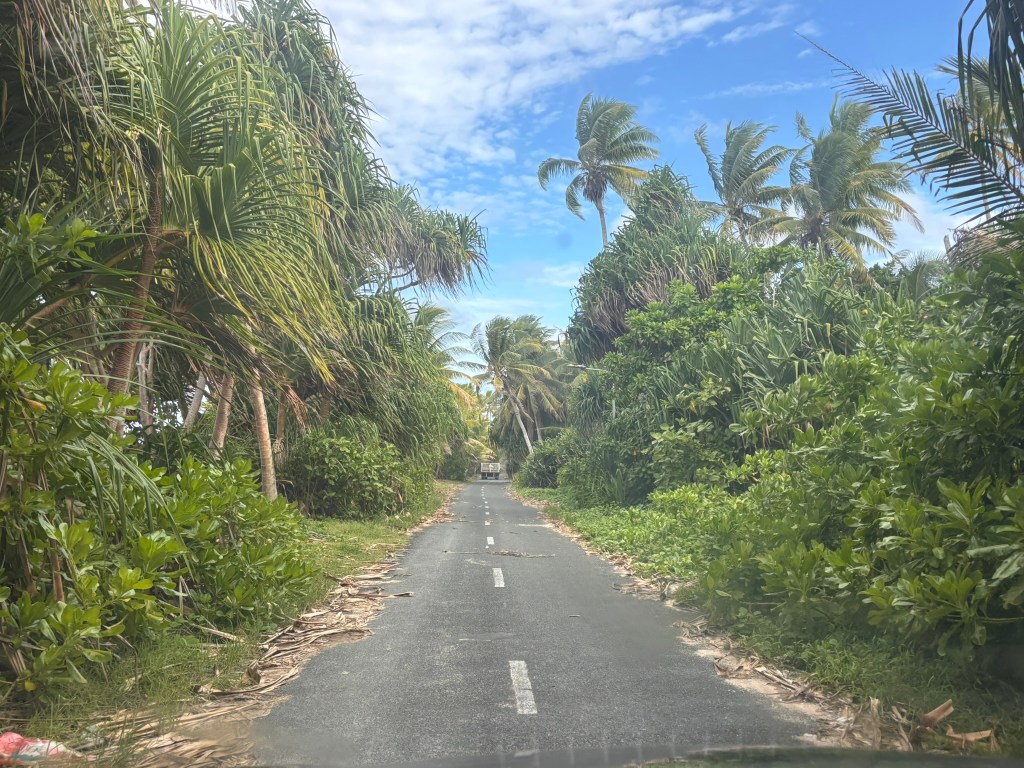
Tuvalu, comprising of of nine islands (comprising four reef islands and five coral atolls), is often described as ground zero for climate change. With an average elevation of less than 2 metres above sea level, it is acutely vulnerable to rising seas, saltwater intrusion, and increasingly intense storms. Its approximately 11,400 citizens live mostly on narrow atolls surrounded by the vast Pacific.
While Tuvalu’s story is frequently told through images of flooding villages or eroded coastlines, the impact of the climate crisis runs deeper into the cultural and social fabric. It reaches into the work done inside households and villages, particularly by women, who hold key roles in weaving, crafting, and passing down cultural skills. The decline of pandanus is not only an environmental problem but a profound cultural and gendered one.
Climate and gender: a double burden
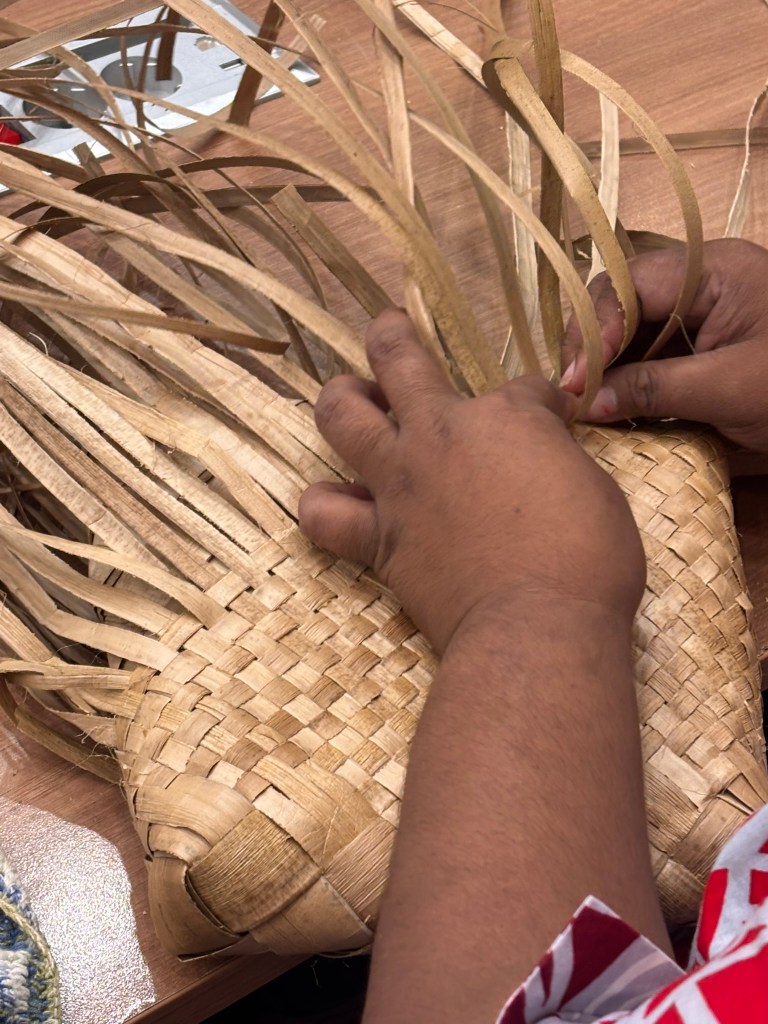
For women in Tuvalu, weaving and craft are more than creative expression, they are a source of income, a way of sustaining families, and a link to cultural identity. Few organizations understand this better than Tuvalu Women for Change, which has made cultural and economic empowerment central to its mission.
“Tuvalu Women for Change is a human rights and feminist organization that works with women and children,” says Filiga Taukei Nelu, Secretary-General of Tuvalu Women for Change. “We are working on empowering women. We are also looking at issues that directly affect women, and that includes climate change, domestic violence, which is one of the major areas of work, as well as economic empowerment and leadership.”
Nelu says craftwork has long been central to women’s roles, providing both income and cultural continuity. For many women without formal employment, handicrafts remain the primary way to support themselves and their families. The organization has therefore made arts and crafts one of its five thematic areas, connecting the practice to both cultural identity and economic security. “Handicraft is the number one source of income for women who do not have full-time jobs,” she explains.
The threat to the pandanus strikes at the heart of women’s work. Not only does it reduce their ability to earn, it erodes their role as custodians of cultural knowledge. Nelu points to the importance of te titi tao skirts, where each family or island maintains specific weaving patterns. “Some of the islands have specific patterns,” she explains. “So when they put it on the titi tao, you know that it is from this particular family.”
If pandanus becomes scarce, those traditions are harder to continue. “Knowledge transfer is an issue,” Nelu says. “There is a lack of skill and capacity building in terms of transferring the skills from the elderly women to the younger ones.”
The challenges are compounded by changing opportunities for young women. “Now there are more options available for girls, to study, to work, to focus on new technologies,” she says. “There is less interest in weaving.”
This dynamic reflects broader patterns across the Pacific region. UN Women notes that “women are heavily involved in informal economic activities” and “women dominate small-scale market operations” with “between 75% and 90% of all market vendors” being women across Pacific Island countries. The organization emphasizes that “women make enormous contributions to economies, whether in businesses, on farms, as entrepreneurs or employees” – yet these contributions, particularly in traditional crafts like pandanus weaving, remain vulnerable to climate pressures.
Preserving culture under pressure
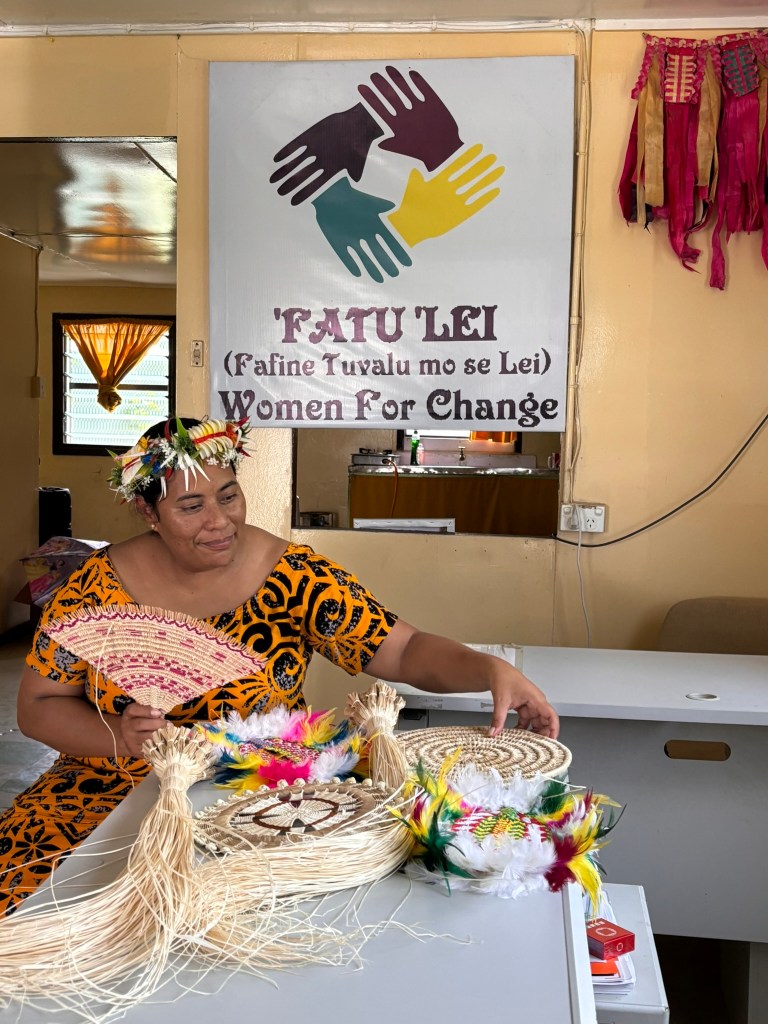
Despite these challenges, Tuvaluan women are working to adapt. Tuvalu Women for Change has run workshops teaching women how to make jewelry and fans from ita, the white inner shoot of the coconut tree. The material is also becoming less reliable, but for now it provides an alternative focus.
“They were learning how to make fans, how to make earrings, and necklaces out of it,” Nelu says. With support from the Commonwealth of Learning, the group continues these programs, especially targeting women who are unemployed or not in school.
The interest is there. In a survey conducted by the organization, about 70% of women without full-time employment said they wanted to learn handicraft or agricultural skills to start small businesses. But the demand clashes with ecological reality. As pandanus supplies decline, fewer women are able to meet that interest.
The Department of Cultural Affairs has also stepped in to support preservation. Faletauina Taelua, Acting Assistant Cultural Officer, says their focus is on ensuring younger generations engage directly with cultural practices. “We encourage women to come together to co-create craft,” she explains. “By working alongside each other, the younger women learn the skills, and the older women know the knowledge is not being lost.”
For Tane, the change is already stark. “The leaves are already brown,” she says, describing how even young leaves collected from the coast arrive damaged. She gestures to a pile at her side. “This is the only one you can use.”
At the national level, cultural officers warn that the decline in pandanus supplies means the decline of knowledge tied to specific patterns and ceremonies. Without pandanus, women may turn to synthetic materials, but the meaning encoded in the original designs cannot be replicated. What is at stake is not just an economic activity, but the continuity of Tuvaluan identity.
Resilient Women

Tuvalu is often described as one of the first nations at risk of being claimed by rising seas, yet less visible is the cultural unraveling already taking place in its villages, woven into the threat to plants like pandanus. For Tuvaluan women, the climate crisis is not abstract. It arrives in the form of threat to valuable cultural practices that they upload in the atoll nation.
For Nelu, Taelua, and Tane, the work continues despite the challenges. Women gather what leaves they can, boil them, dry them, and encourage women to continue practicing their craft and passing it on to their daughters.
As Nelu puts it, the stakes are clear. Handicraft is not only an income. It is identity. And if pandanus is under strain, so too is a central part of Tuvalu’s cultural fabric, upheld by women.



 The New Atoll
Leave a comment