


Keyonce Tauli Lee Hang describes herself first as a proud fa‘afafine. Not as a qualifier, but as a grounding. Her identity is not separate from her academic path or professional ambitions. It is the lens through which she understands responsibility, service, and leadership.
Born and raised in Samoa, Keyonce comes from Utualii and Sinamoga and currently resides in Moamoa. Her story, she says, is shaped by faith, family, and village life. Those influences were not abstract. They were daily structures that defined how she moved through the world.
For 21 years, Keyonce travelled by bus to Marist, St Joseph, and the National University of Samoa. Village pulega was firm. Respect was non negotiable. Church was not a choice, but a commitment. These early lessons, she says, shaped her discipline and her understanding of service, humility, and responsibility long before she encountered public policy as a field of study.
When Keyonce was five years old, her father died. From that moment, her mother became the family’s anchor. She raised the children with strength and care, but never alone. Her brothers and sisters stood beside her, ensuring the children were loved, protected, and well cared for. “It truly took a village to raise us,” Keyonce says.
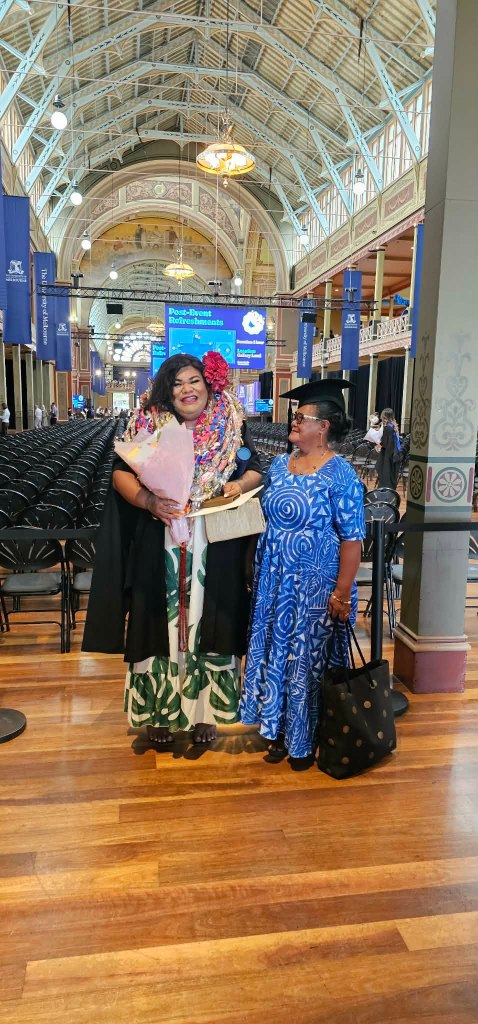
As a fa‘afafine growing up in that village context, Keyonce learned early about visibility and obligation. She was seen. She was known. With that came expectation. Her identity carried responsibility to family and community, and an early understanding that individual success has meaning only in relation to others.
Studying overseas was not something Keyonce imagined for herself. It was her mother’s dream first. Her wish was simple but powerful. She wanted her children educated and given opportunities beyond what she had. That dream became tangible in January 2024, when Keyonce began a Master of Public Policy and Management with a specialisation in Politics and International Studies at the University of Melbourne.
The transition was not without struggle. Keyonce speaks openly about a period when she became, in her words, high minded and confident in her own strength, forgetting who had carried her. What followed was a humbling. “God, in His wisdom, humbled me,” she says. The road became bumpy, filled with hard lessons and moments that tested her faith.
She does not regret that season. “It reshaped me. It grounded me. It taught me obedience, patience, and gratitude,” Keyonce says. Faith, for her, became discipline rather than reassurance.
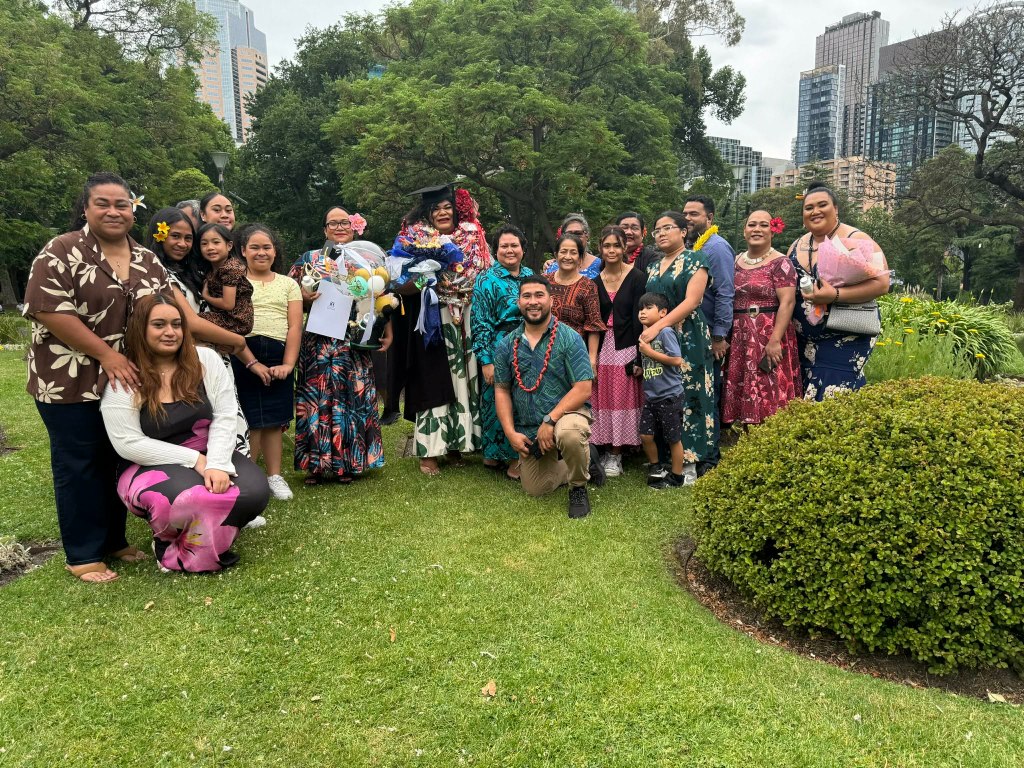
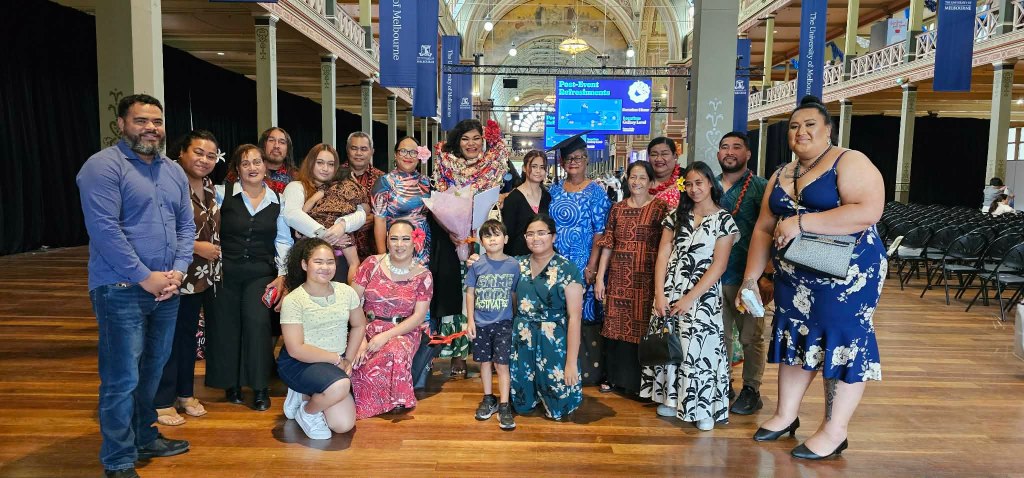
This year, Keyonce graduated with distinction. She is careful to emphasise that this achievement is not hers alone. She dedicates it to her mother, her siblings, her family, and her friends who believed in her, prayed for her, and carried her even when she doubted herself. The degree, she says, represents continuity with village values rather than departure from them.
For Keyonce, public policy is not an abstract exercise. It is a tool. As a fa‘afafine, she is motivated by the responsibility to create spaces where people like her are seen, valued, and represented. Not as exceptions, but as participants in systems that shape lives.
“I am driven by the desire to use my education as a tool for service, impact, and change,” she says. “Not just for myself, but for those who come after me.”
Her advice to young Pacific people, particularly fa‘afafine and gender diverse youth, is direct. Believe that your background is your strength, not your limitation. The journey will not always be easy. There will be doubt, sacrifice, and exhaustion. Ask for help. Build community. If doors do not open, learn how to build your own and hold them open for others.
Keyonce does not describe this moment as arrival. She describes it as redemption. She knows where she comes from. She knows who she is. She knows who walks with her.
“I am living proof that resilience is born in our villages,” she says. “That faith can carry us through brokenness, and that no setback is greater than purpose.”
“This is not just my success,” Keyonce adds. “It is our victory.”

 The New Atoll
Leave a comment