
Dr. ‘Inoke Hafoka, Assistant Professor and Program Lead of Pacific Studies at BYU–Hawaii, has received the university’s Faculty Scholarship Award in recognition of his excellence in research, publication, and teaching. The son of Tongan immigrants, Dr. Hafoka is a scholar of diaspora, identity, migration, race, and education, he has published widely and contributed to important conversations on Pacific issues.
By Vaelei Von Dinklage
The New Atoll: Dr. ‘Inoke Hafoka is the proud recipient of Brigham Young University – Hawaii’s Faculty Scholarship Award, recognized as a top researcher and author of academic articles.
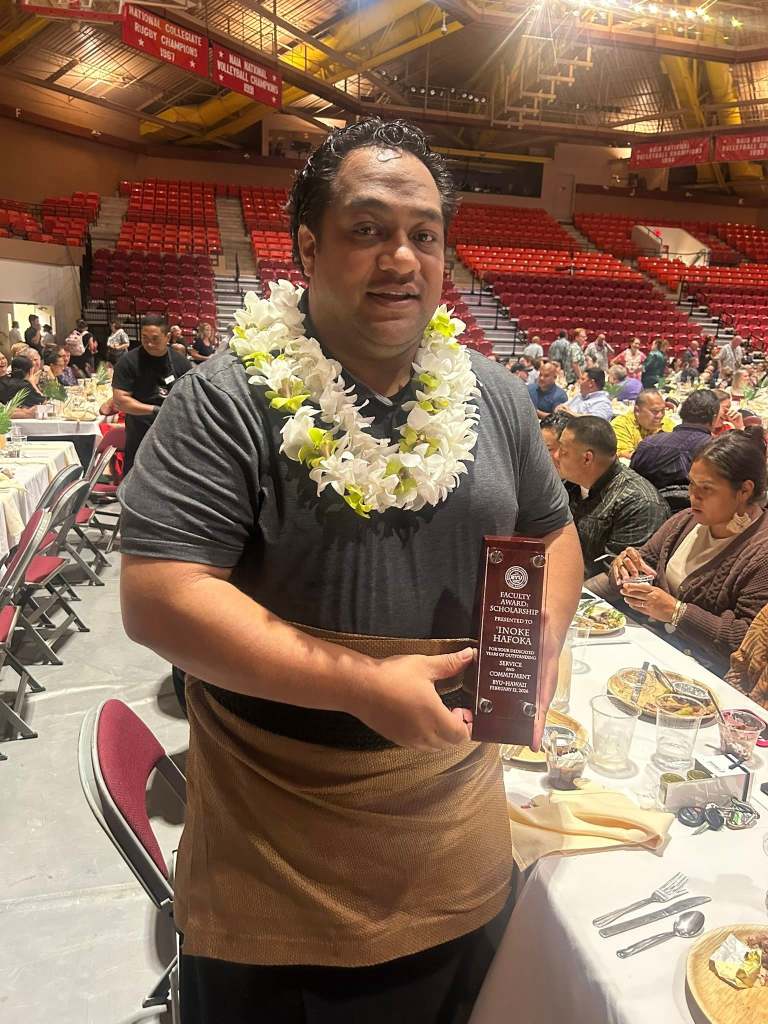
The award honors a faculty member who demonstrates excellence in scholarship, research, and publication, while also embodying dedication to teaching and student mentorship. Dr. Hafoka received the recognition not only for his strong research record, but for his demonstrated care for students, leadership, mentoring, commitment to self-improvement, and collaborative spirit. He currently serves as Assistant Professor and Program Lead of Pacific Studies at BYU–Hawaii. His research focuses on diaspora, identity, migration, race, and education, with particular attention to Pacific communities.
Over the years, Dr. Hafoka has been invited to numerous talanoa sessions to share his insights on Pacific issues. He has published widely, contributing academic articles, book chapters, and research reports that engage critical questions affecting Pacific peoples both locally and globally. Reflecting on the award, Dr. Hafoka said he was deeply honored, particularly as a relatively early-career faculty member.
“As a teaching-focused institution, completing research each year can be challenging, so I am especially grateful for the knowledge and skills gained during my doctoral studies, which have helped me continue conducting research at this level. I am truly humbled and honored to receive this award, and I look forward to continuing to deepen my understanding of research, as I still see myself as a student rather than an expert,” he said.
The son of Tongan immigrants, Dr. Hafoka was raised in Glendale, Salt Lake City, Utah, in the Salt Lake Valley. His experiences are deeply rooted in his Tongan community in Salt Lake City and Utah counties, as well as the support of his extended family.
Interestingly, becoming a professor was never part of his original plan.
“Becoming a professor was not something I had dreamed of or imagined myself doing at this stage in my life. I originally envisioned pursuing a career connected to sports in some capacity, but that path shifted as I continued my education and moved into graduate studies. Over time, I began to recognize how much I valued the questions that emerged in my coursework and research, and how meaningful it felt to engage with ideas in a deeper way.
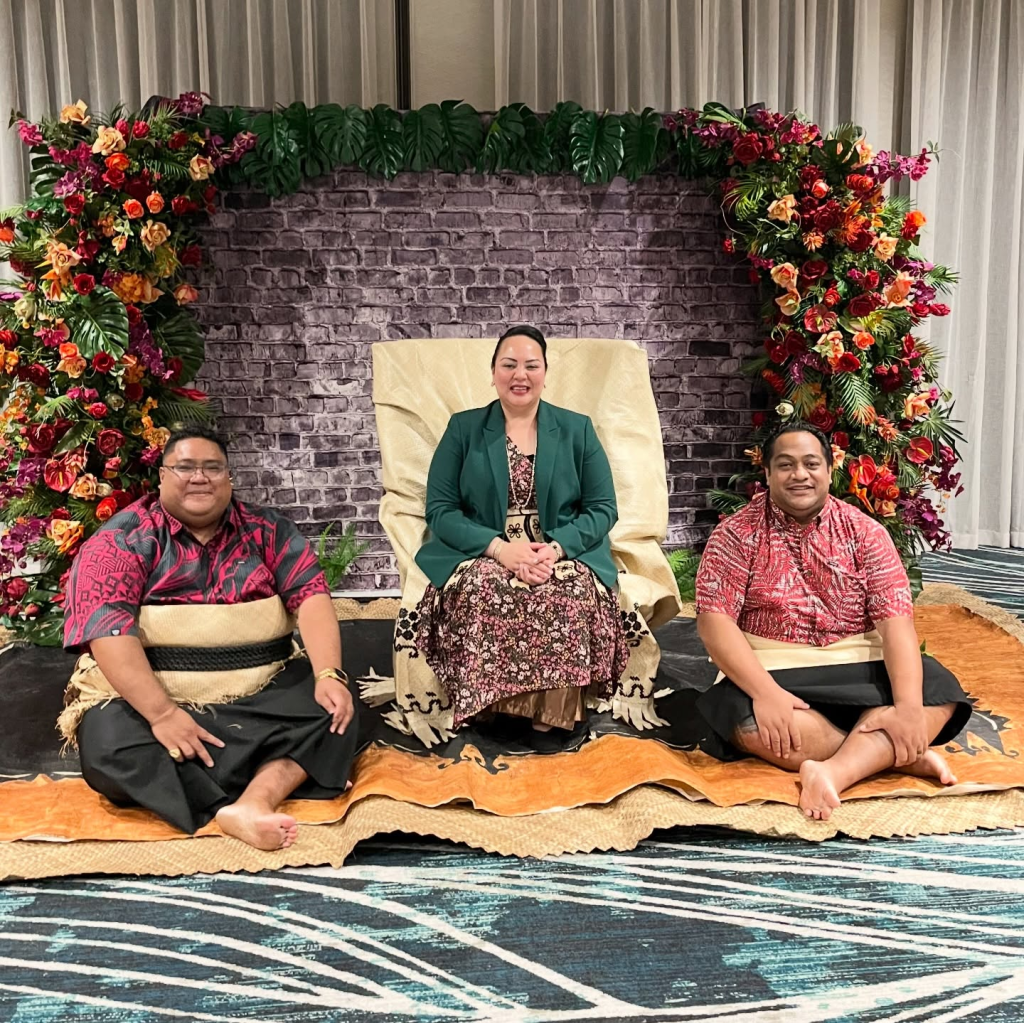
“The training I received ultimately led me to consider a path in academia, and I feel fortunate to have been given the opportunity to pursue this profession.”
During his youth, Dr. Hafoka was actively involved in sports, including basketball, football, rugby, volleyball, and track and field. He completed his Bachelor of Science in Sociology at BYU–Provo, a Master of Education at the University of Utah, and a PhD in Education at UCLA.
A significant milestone in his academic journey was receiving his tātatau as a culminating part of earning his doctorate, contributing to the revitalization and re-imagination of tātatau within the Tongan community.
Beyond academia, Dr. Hafoka is a husband, father of four children, and also works as a ramp agent with Delta Air Lines.
He believes the greatest highlight of his career so far has been witnessing the growth and success of his students.
“There is something especially meaningful about watching students gain confidence, develop critical thinking skills, and apply what they have learned beyond the classroom. At the same time, I have come to appreciate my own growth as an educator, continuing to refine my teaching, making course material more relevant and accessible, and learning how to better engage and support the diverse student population at my institution.
“My career has certainly required time, energy, and focus, which can sometimes extend beyond the regular workday. However, my family has been incredibly supportive and understanding throughout this journey. Their encouragement has helped me navigate the demands of academia, and I continue to learn how to better balance the responsibilities of work and family life,” he added.
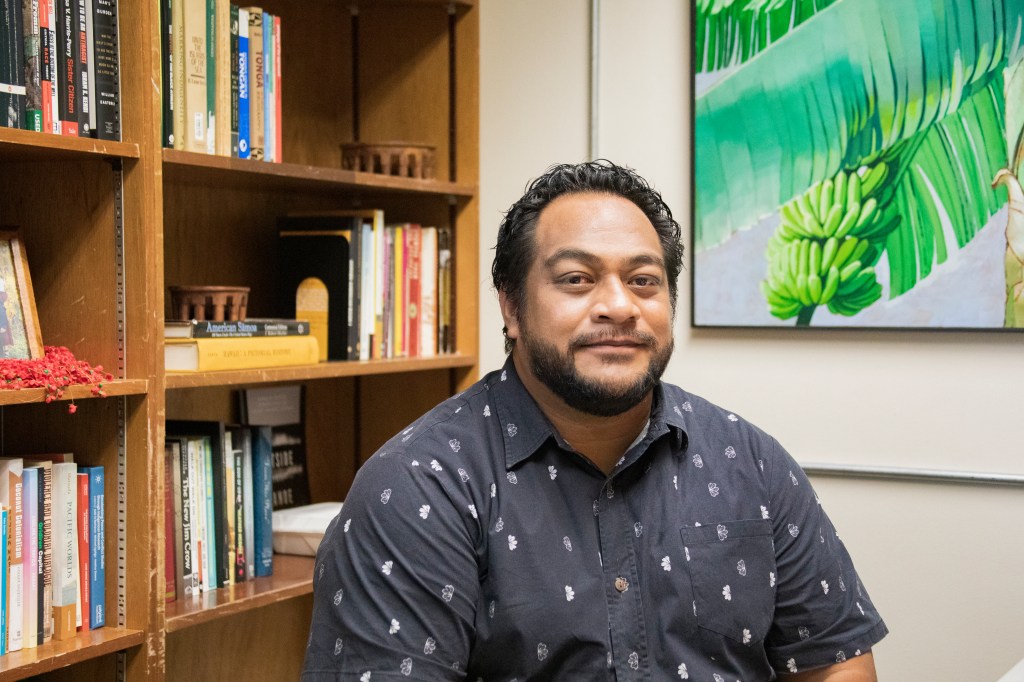
As a Tongan-American scholar, Dr. Hafoka emphasizes that identity is not confined to geography, but is rooted in values, relationships, and ways of living that extend across borders. One cultural principle he holds closely is tauhi vā, the intentional nurturing of relationships and relational spaces.
“Tauhi vā is a core value that I strive to embody in my daily life, guiding how I engage with family, community, and colleagues alike.
“My Tongan heritage has grounded me in humility, collective responsibility, and service. These values influence how I teach, mentor, and conduct research. I see my work not simply as individual achievement, but as part of a broader commitment to represent and remain accountable to the communities that have shaped me,” he explained.
About the Author : Vaelei Von Dinklage is a regional reporter for The New Atoll. Previously she reported for Samoa Observer where she covered environment, politics, community and sports. She was a student fellow for Conservation International Samoa where she covered climate meetings. She is a graduate of the National University of Samoa Journalism Programme.

 The New Atoll
Leave a comment