
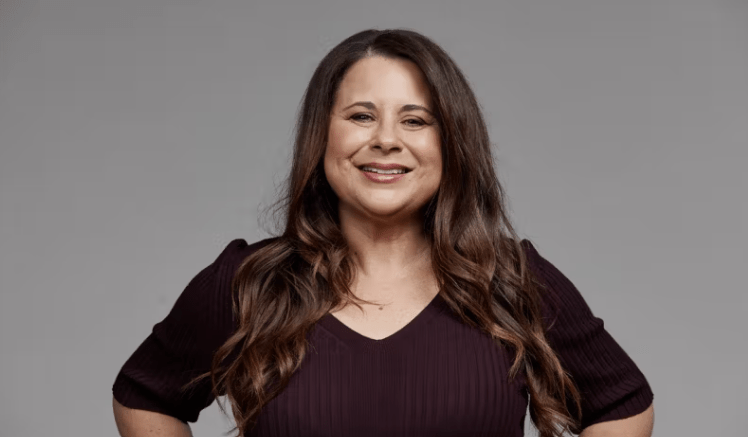
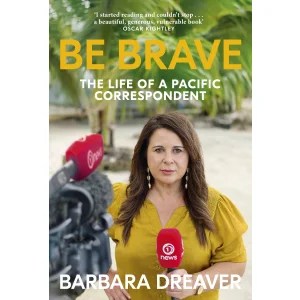
Veteran Pacific journalist Barbara Dreaver has spent more than three decades telling the region’s stories. With the release of her book Be Brave, she reflects on a career shaped by persistence, purpose, and a deep connection to the Pacific.
By Vaelei Von Dincklage
WELLINGTON, New Zealand : Born and raised in Kiribati to an I-Kiribati mother and New Zealand father, Dreaver’s roots span across the region, with family ties extending to Solomon Islands, Fiji, and beyond. Her career has traversed print, radio, and television, including co-owning a newspaper in Rarotonga in the 1990s.
Speaking to The New Atoll, Dreaver said the book is grounded in the same motivation that first drew her to journalism.
“I’ve had quite a colorful and productive career. I became a journalist because I wanted to make a difference and change things that were unjust and I have done a lot of that. But, because we live in turbulent times, I wanted to show people how wonderful the Pacific is, and how important the Pacific is in these crazy times,” she said.
“Even when I started writing, things were quite turbulent in the Pacific, you know in the world with conflicts and so forth. So, I wanted to share with the public just how important the Pacific is, its challenges, the joy of it as well, a raw look at it but also show how wonderful it is.”
Her reflections come with a clear-eyed assessment of the realities Pacific journalists face today. Limited access to officials and increasing hostility toward the media remain persistent challenges, particularly for women.
“I think getting access to people who don’t want to talk, the elected officials, is one. Second would be the abuse and coping. I cope well with it, I’m old enough not to care about individual comment but I think that all journalists across the Pacific are having a really challenging time,” she said.
“So, it’s not just about me, it’s about any journalist in the Pacific having problems getting access. There’s a real move to limit media freedom and also the abuse all journalists in the Pacific get, especially women journalists. Being a woman journalist comes with its own set of challenges.”
Most Impactful Field Reporting
Over the course of her reporting, Dreaver has encountered leaders who left a lasting impression, including former Kiribati President Anote Tong.
“President Anote Tong had such a great grasp of not Kiribati but the wider region and he really fought for climate change. I’ve always been so impressed with him.”
But it is the human cost of certain stories that has stayed with her most. Covering the measles epidemic in Samoa, which claimed 83 lives, mostly children, remains one of the most difficult experiences of her career.
“The most disaster that impacted me would be the Samoan measles epidemic. I found that really difficult because I was watching children die or I was going to funerals of children and it was a preventable disaster,” she said.
“Unlike a climatic one, like a cyclone you can’t control that but this one was preventable and it still breaks my heart when I think about the families impacted there.”
Media Restrictions in the Pacific
Dreaver also reflected on the constraints placed on journalism across the region. Fiji, particularly during the coup period, proved one of the most challenging environments she worked in. As a foreign journalist, she was detained and banned from the country for eight years.
“Being banned from Fiji for eight years made covering Fiji particularly more difficult but there were ways around it which I obviously found,” she said.
She also pointed to Nauru as another example of restricted access.
“Nauru is a very hard place to get into because you have to apply for a visa and you have to pay something like $8,000 dollars, and there’s no guarantee. You likely won’t get a visa and you would lose that money. So getting to Nauru also to report was very hard.”
Advice for Journalists
For emerging journalists, Dreaver’s advice is grounded in both practice and principle. Build relationships, respect local context, and remain firm in the role of holding power to account.
“My first advice as a Pacific correspondent from outside is to make sure you touch base with the local journalists. That’s what I do, I’ve got professional partners across the Pacific because that’s the way you find out what’s really going on,” she said.
“They’ve got the local knowledge and you don’t. They can tell you what’s going on on the ground and update you.”
At the same time, she stresses the importance of navigating cultural expectations without compromising journalistic responsibility.
“The second thing is to be respectful but don’t let it impact your job. I’m always dressed according to local customs, I make sure I cover my legs when I’m in Polynesia. That kind of respect is important especially when you’re going into villages,” she said.
“One thing that leaders like to say is ‘You are not respecting local culture’ because you’re challenging them. But our job literally is to challenge, so don’t be afraid to challenge because that’s what we have to do to get results.”
Ultimately, the message at the heart of her book remains simple, but not easy.
“The title of my book is Be Brave and that is what I tell young journalists, they have to be. It’s a tough one, it’s easier said than done, especially when you might be doing stories that impact on our own community or even your family or church.”
“That’s hard but you do need to find that in the stream because we have to report without fear or favour.”
For Pacific journalists in particular, she acknowledges the added weight of culture, community, and authority.
“Sometimes we have to challenge that authority. You just have to find it but what you also have to find is a group of people and have them around you. People you trust, who will look out for you and can give you good advice,” she said.
“I have about four people who I will go and talk to and just say, hey this is what’s happening and I trust their advice.”
And one final, practical piece of guidance shaped by experience.
“Here’s a very important one, don’t read the comments on social media and do not reply to the comments. Even if you read them because it’s very tempting not to, make sure you don’t reply to any of the views because that validates them.”

 The New Atoll
Leave a comment